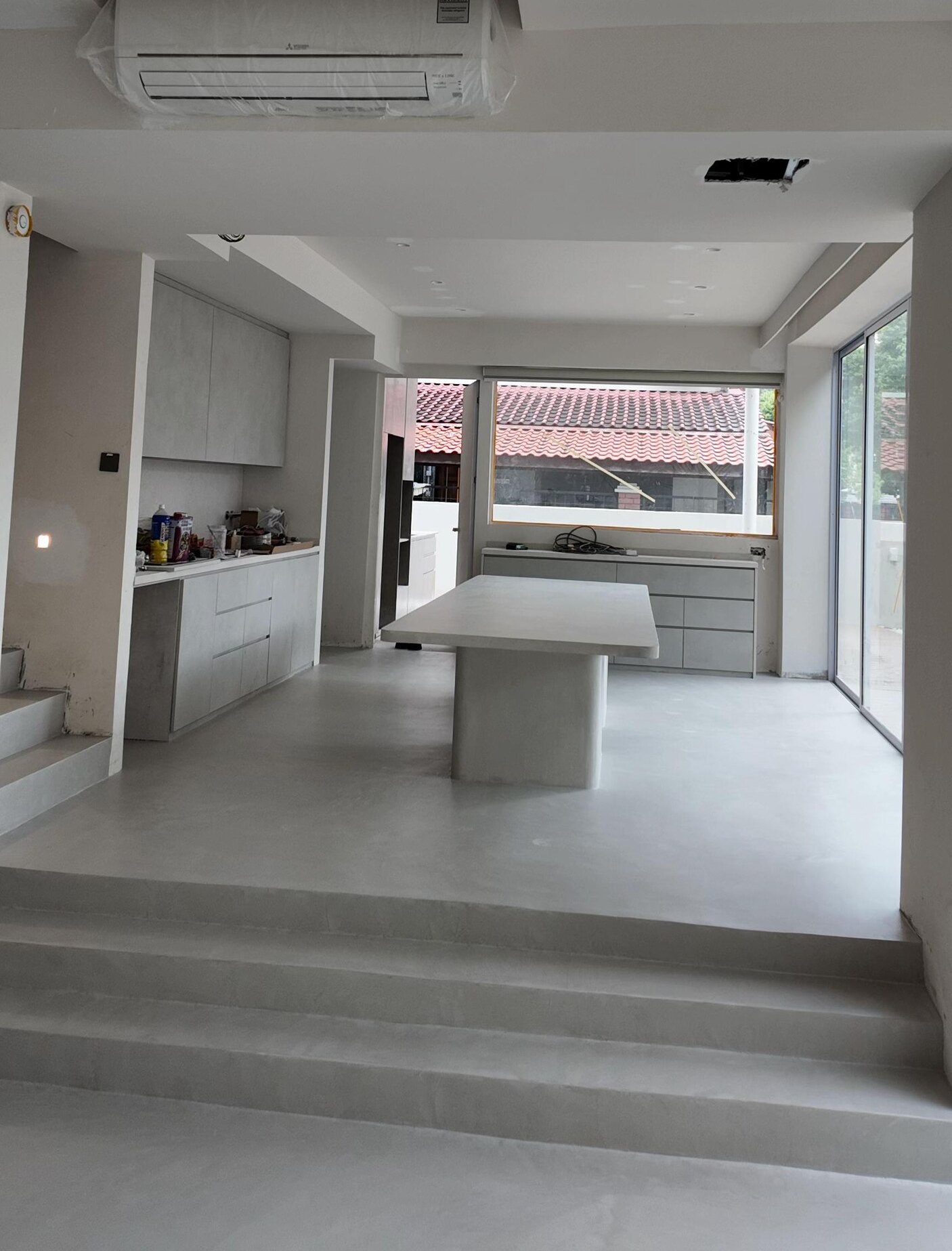
Yes. Microcement can be applied to kitchen countertops, islands and splashbacks, and in principle to cabinet fronts, provided the base is rigid and stable and the surface is properly sealed. It gives a seamless, stone-like finish with no grout line near the cooking. It is not heatproof or cut-proof, though, so trivets and chopping boards are part of living with it.
Where microcement works in a kitchen
- Splashbacks: one continuous surface behind the hob and sink, with no grout lines to scrub.
- Islands and worktop faces: the sides and fronts of islands and counters, so they read as one solid piece.
- Countertops: possible with the right system and sealer, with sensible care.
- Floors: running from the kitchen into living areas with no transition strip.
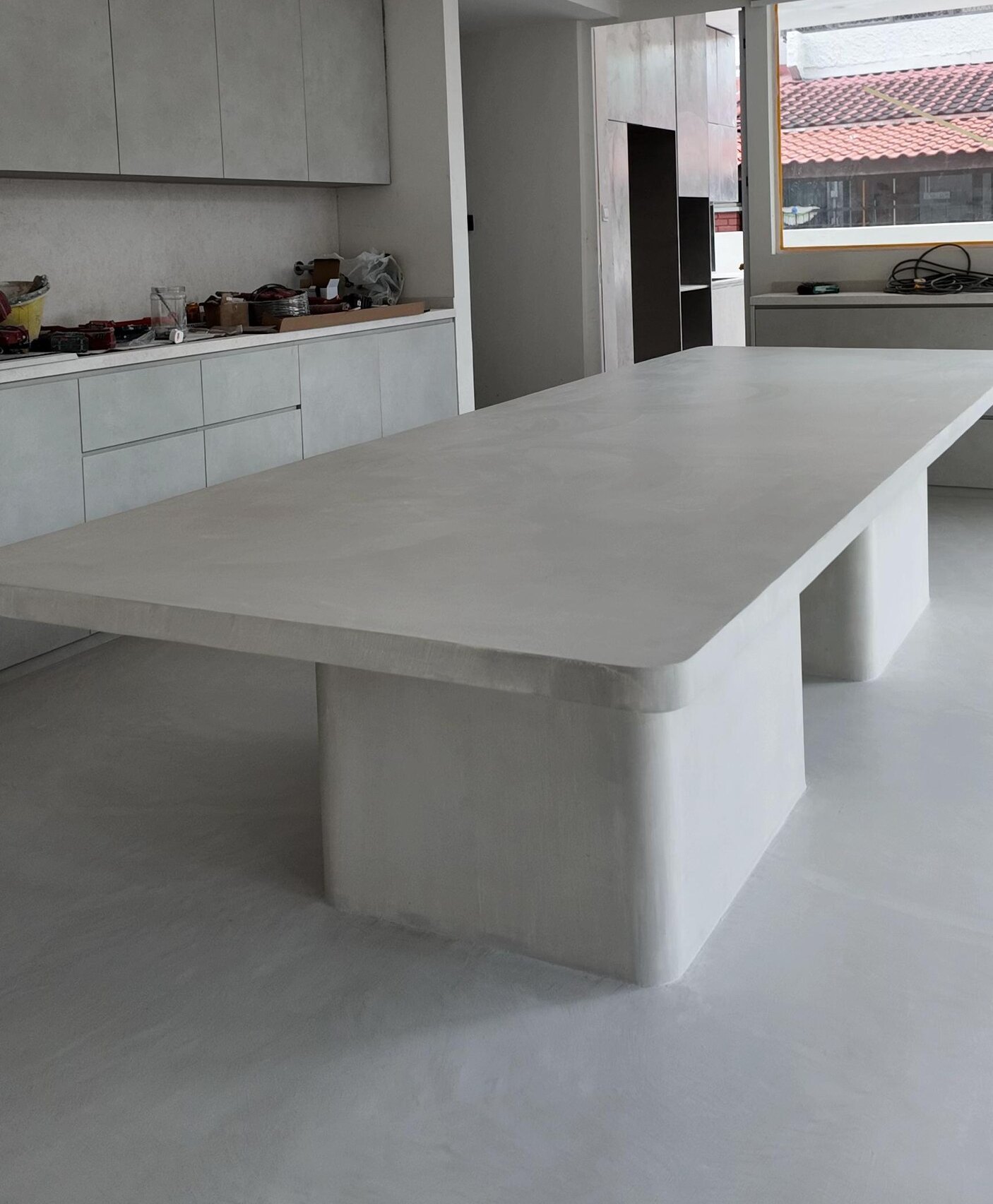
What it handles, and what it does not
Spills and stains
Once sealed, microcement resists everyday spills. Wipe up oil, curry, coffee, wine, citrus and vinegar promptly. Acids left sitting can mark the surface if the sealer is worn.
Heat
Do not put hot pots and pans straight from the stove onto a microcement worktop. Use trivets. High, direct heat can damage the sealer.
Cutting
Always use a chopping board. Knives will scratch the top coat.
Water
Around the sink, the sealed surface sheds water well. Make sure joints around the sink and hob are properly detailed.
Cabinet fronts
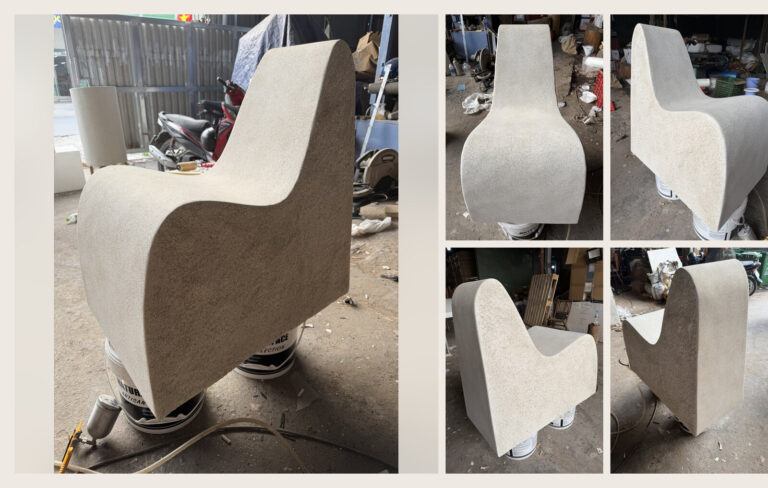
Microcement can bond to many rigid surfaces, so cabinet doors and carcasses are technically possible. In practice this is detailed work: doors flex and get knocked, edges take wear, and the substrate has to suit the system. If cabinet fronts are part of your plan, raise it at the quote stage and ask your applicator what substrate and system they would use and how the edges are protected. For many kitchens, keeping cabinets in laminate or veneer and using microcement on the splashback, island faces and floor gives the look with less risk.
Care for kitchen surfaces
- Clean with a pH-neutral cleaner and a soft cloth
- Avoid bleach, ammonia and abrasive pads
- Wipe acidic and oily spills promptly
- Use trivets and chopping boards every time
The full routine is in how to clean and maintain microcement.
Singapore kitchens
Many Singapore kitchens see heavy wok cooking, which means oil splatter and high heat near the hob. A microcement splashback with no grout lines is easy to wipe down. For the worktop itself, think about how you cook. If you put hot woks down without thinking, a dedicated heat-resistant zone near the hob makes sense.
Questions to ask before a kitchen job
- Which surfaces are included: splashback, island faces, worktop, floor?
- What is the base underneath, and is it rigid enough?
- How are edges, corners and the joins around the sink and hob detailed?
- Which top coat is used, and how does it handle oil and acidic spills?
- What care routine do you recommend, and when might the top coat need refreshing?
- Should the kitchen cabinets be installed before or after the microcement work?
Sequencing matters in a kitchen. Agree with your interior designer or contractor which trade goes first so finished surfaces are not damaged by later work.
How Jiu Ding Sheng approaches kitchens
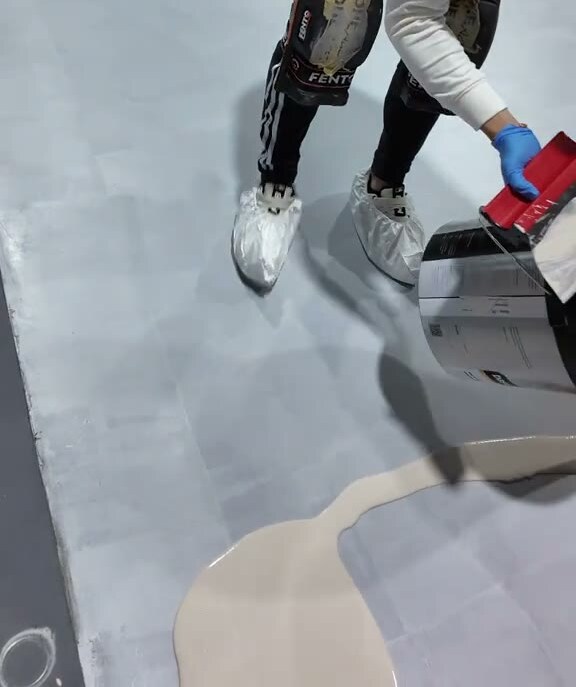
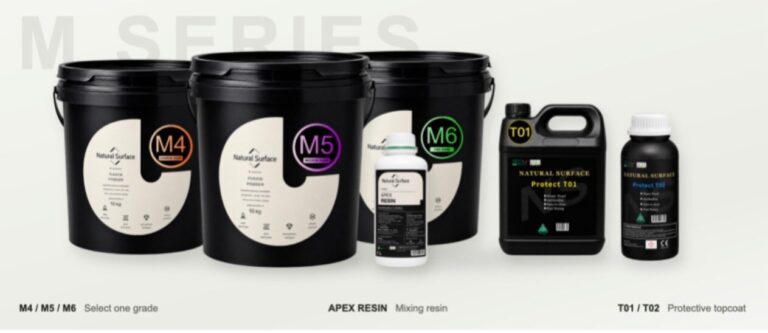
In kitchens and wet areas we lay microcement on splashbacks, islands and worktop faces without a grout line anywhere near the cooking, and on floors that run through the home. We use the Natural Surface M Series at 1 to 1.5mm in four layers with no primer, sealed with two protective top coats. Read about where it works on the Material page and see finished surfaces on the Projects page.
Related: microcement vs epoxy and how thick microcement is.
Quick answers
Is microcement heat resistant on a countertop?
It should not take hot pans directly. Use trivets, because high direct heat can damage the sealer.
Will microcement stain in the kitchen?
Once sealed it resists everyday spills. Wipe oil, citrus and vinegar promptly, since acids left sitting can mark it.
Can microcement go over my existing kitchen tiles?
Yes, if the tiles are firmly bonded and the surface is properly prepared. Splashbacks are a common example.
Can microcement be applied to cabinet doors?
It is technically possible on a suitable rigid substrate, but it is detailed work. Raise it at the quote stage and ask what substrate, system and edge protection would be used.
Next step
Planning a kitchen? Send us the layout and photos of the current surfaces. WhatsApp +65 8049 1188 or use the contact page.