Microcement can be used in a Singapore bathroom, but the microcement itself is not the waterproofing. The cement body is porous. Its water resistance comes from the sealed top coats, and the real waterproofing comes from a sound membrane underneath. Get both right and walls, vanities and kerbs are straightforward. Shower floors need extra care and should only be done over a proper membrane.
Here is what that means in practice for HDB, condo and landed bathrooms.
Water resistant is not the same as waterproof
Think of a bathroom as layers:
- The structure and screed. The slab and the bed the original finish sits on.
- The waterproofing membrane. This is what stops water reaching your neighbour below. In most existing bathrooms it already sits under the tiles.
- The existing finish. Usually tiles.
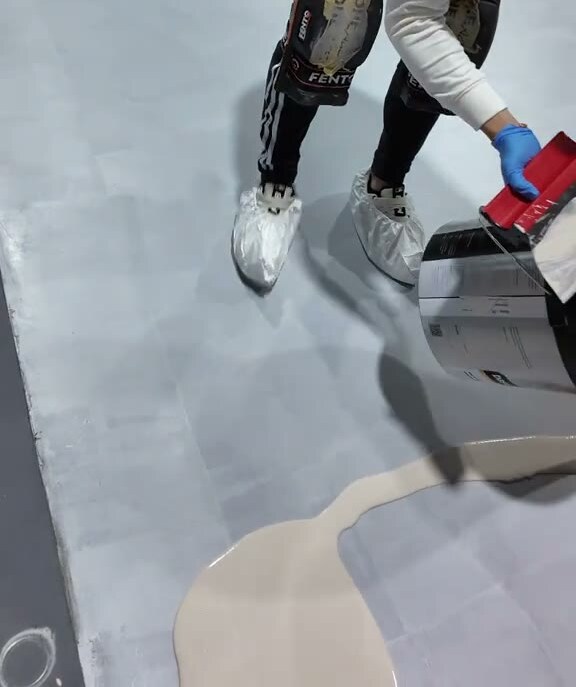
- The microcement system. Thin layers of cement-based material, sealed with protective top coats so water beads and wipes off instead of soaking in.
The sealed microcement keeps water out of the finish. The membrane keeps water out of the building. If the membrane underneath has already failed, a new surface on top will not fix the leak.
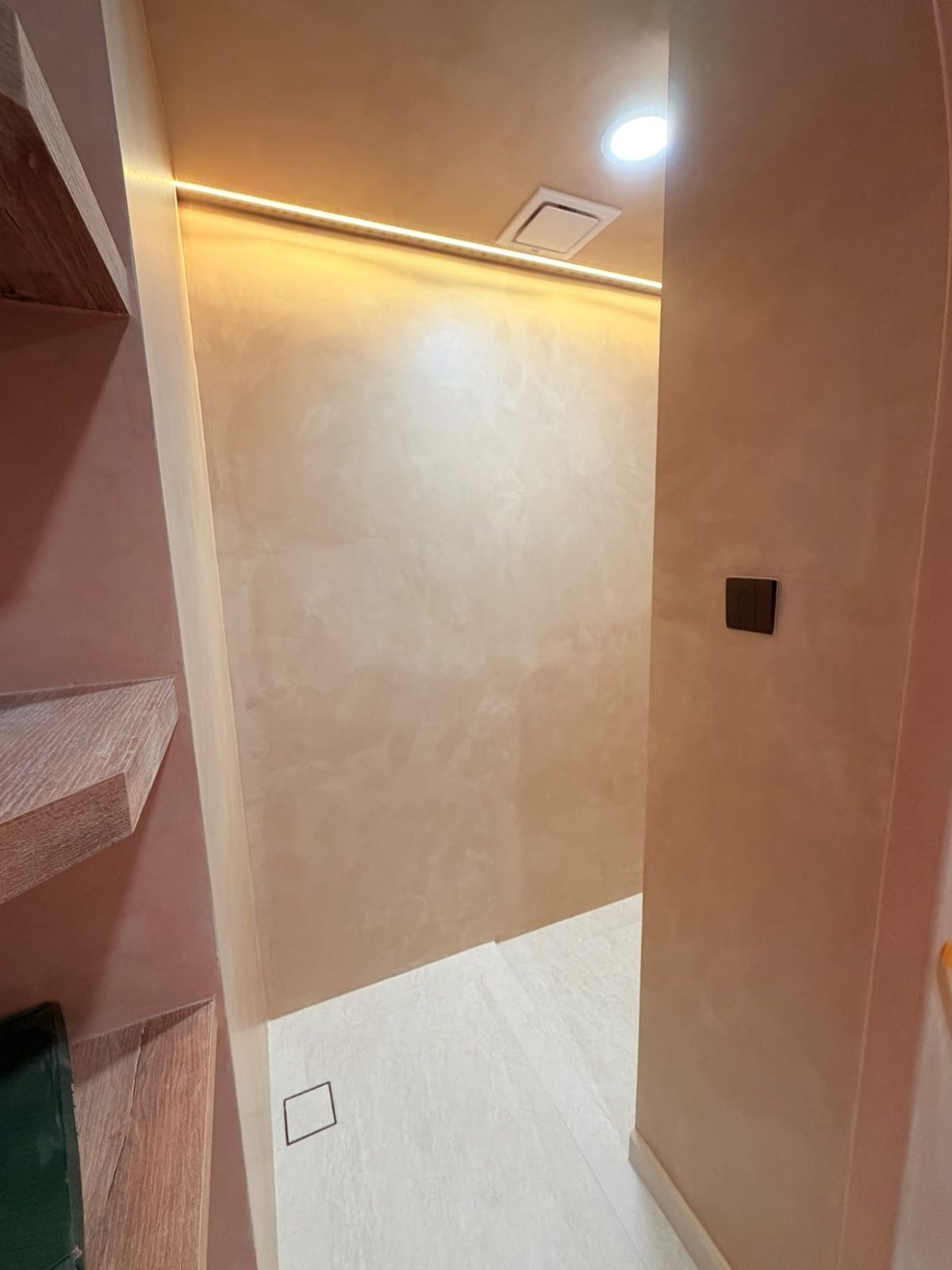
Where microcement works well in a bathroom
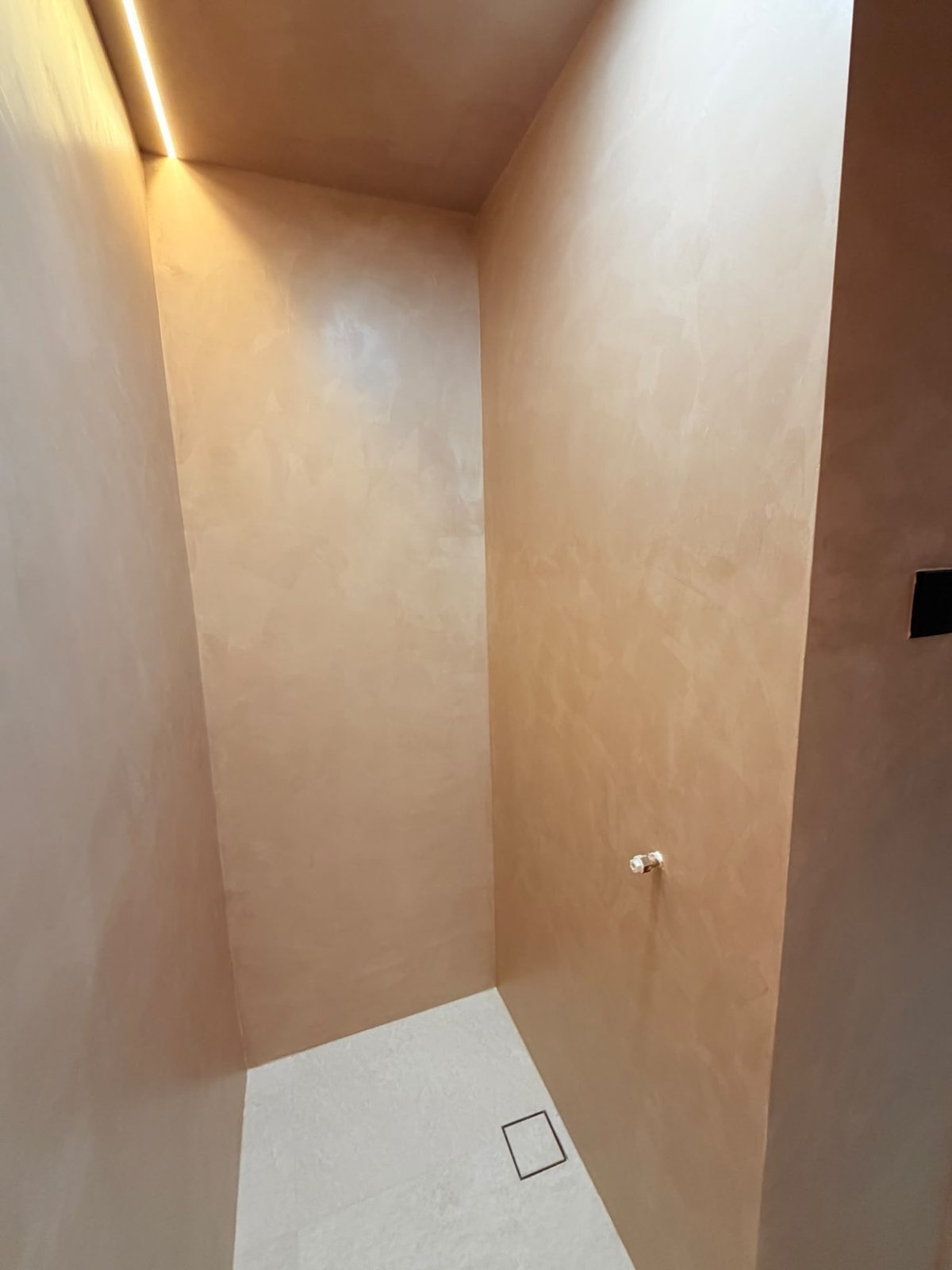
- Walls, including shower walls, which shed water quickly
- Vanities and vanity fronts, including integrated basins and ledges
- Kerbs and niches, which become one continuous surface with no grout lines
- Bathroom floors, where there is a sound membrane underneath and the floor falls properly to the drain
Where to be careful
- Shower floors take standing and running water every day. Only do them where a proper membrane is in place and the falls are right.
- Bathrooms with existing leaks need the leak found and fixed first.
- Hollow or loose tiles can move and crack the finish above, and may hint at water already behind them.
Slip resistance on wet floors
A smooth sealed floor can be slippery when wet. For bathroom floors, ask for an anti-slip additive in the top coat and ask the applicator to put the specification in writing.
Humidity and mould
Singapore bathrooms stay humid, and grout lines are where mould usually starts. Microcement has no grout lines, so there is no porous joint for mould to settle into. You still need ventilation, and the sealer needs looking after with the right cleaner. See how to clean and maintain microcement.
HDB rules to know
When an HDB bathroom floor is replaced, HDB requires waterproofing screed and a waterproofing membrane under the new finish, and a water test is usually part of the process. For new flats, HDB also restricts hacking and replacing the original bathroom finishes in the early years. Overlays that leave the original finish and membrane in place are generally the route taken during that period. Check your flat’s current conditions on HDB’s renovation page.
How Jiu Ding Sheng approaches bathrooms
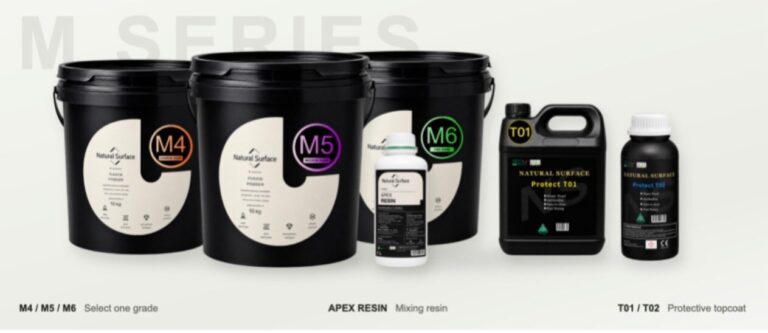
Bathrooms are the most common reason people call us. Our position is simple: the water resistance comes from the sealed system, two protective top coats, over a sound waterproofing membrane. We use the Natural Surface M Series, laid at 1 to 1.5mm in four layers with no primer: base coat, face coat and two top coats. Walls, vanities and kerbs are straightforward. We only do shower floors where there is a proper membrane underneath, and we use an anti-slip additive on wet floors. A bathroom usually takes us 3 to 4 working days. You can see finished bathrooms on our Projects page.
If you are still deciding, read is microcement worth it for an HDB bathroom and options for old tiles and mouldy grout.
Quick answers
Is microcement waterproof on its own?
No. The cement body is porous. It becomes water resistant once sealed with protective top coats, and the waterproofing of the bathroom comes from the membrane underneath.
Can microcement be used inside the shower?
Shower walls are straightforward. Shower floors should only be done where there is a proper waterproofing membrane underneath and the floor drains correctly.
Will microcement fix a leaking bathroom?
No. A leak means water is getting past the membrane. It has to be found and repaired first. Microcement can then go on as the finish.
Is a microcement bathroom floor slippery?
It can be when wet if it is smooth. Ask for an anti-slip additive in the top coat for bathroom floors.
Next step
Send us photos of your bathroom and tell us about any past leaks, and we will tell you honestly what is possible. WhatsApp +65 8049 1188 or use the contact page.