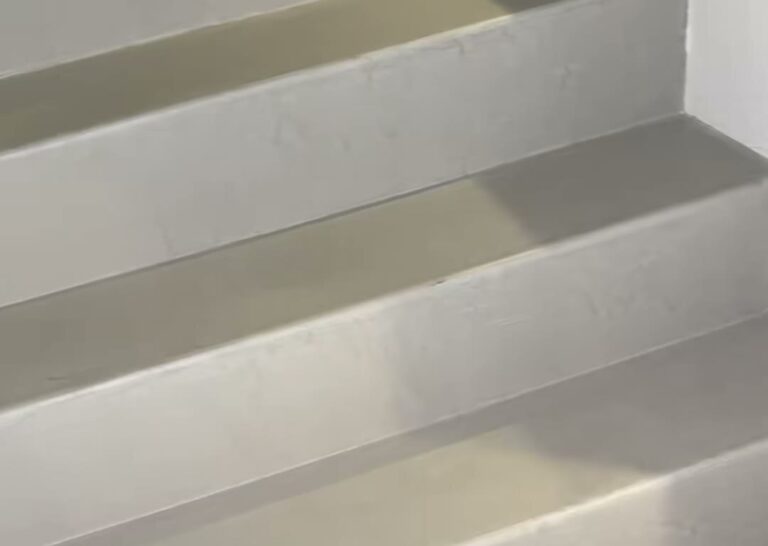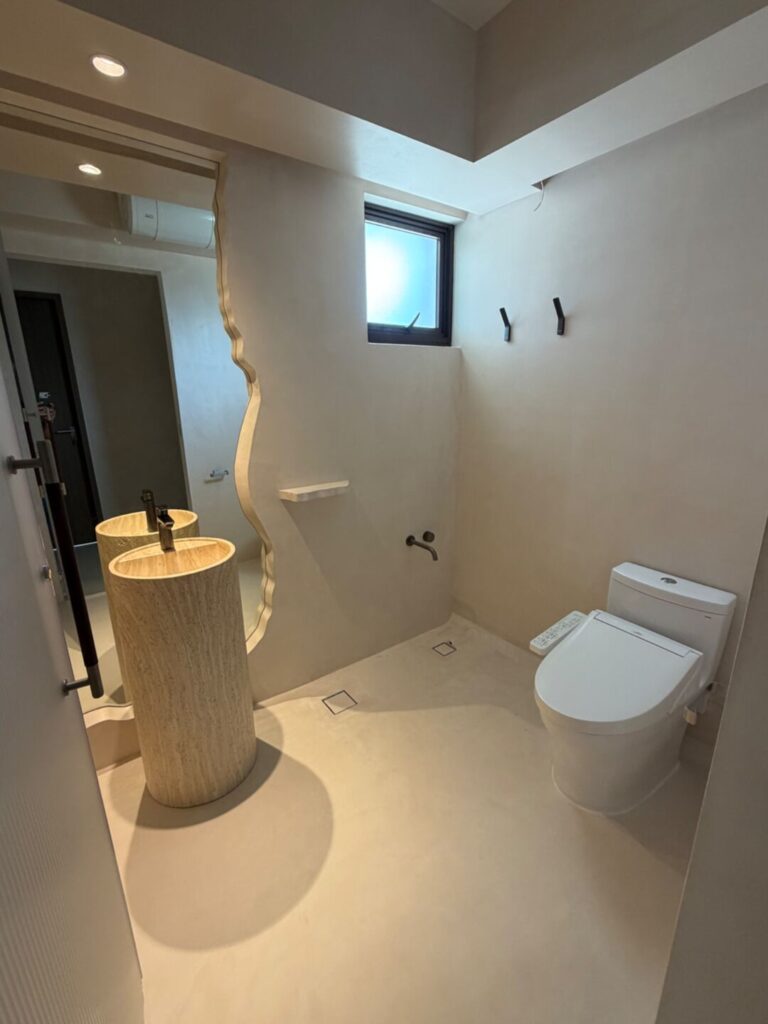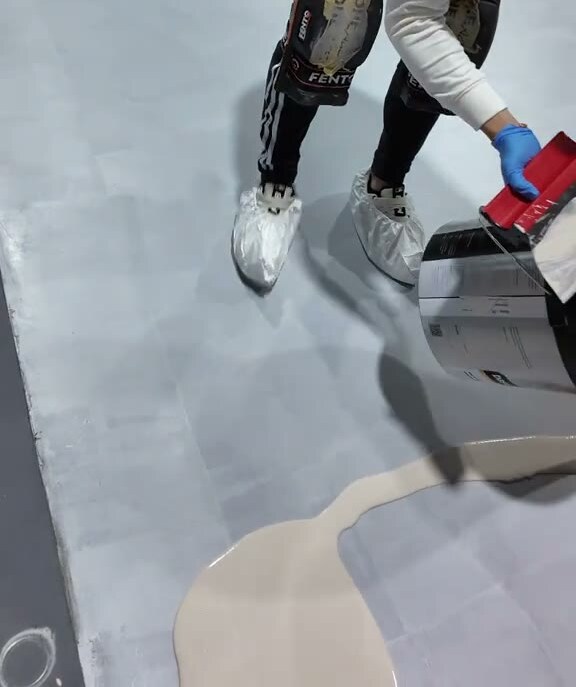
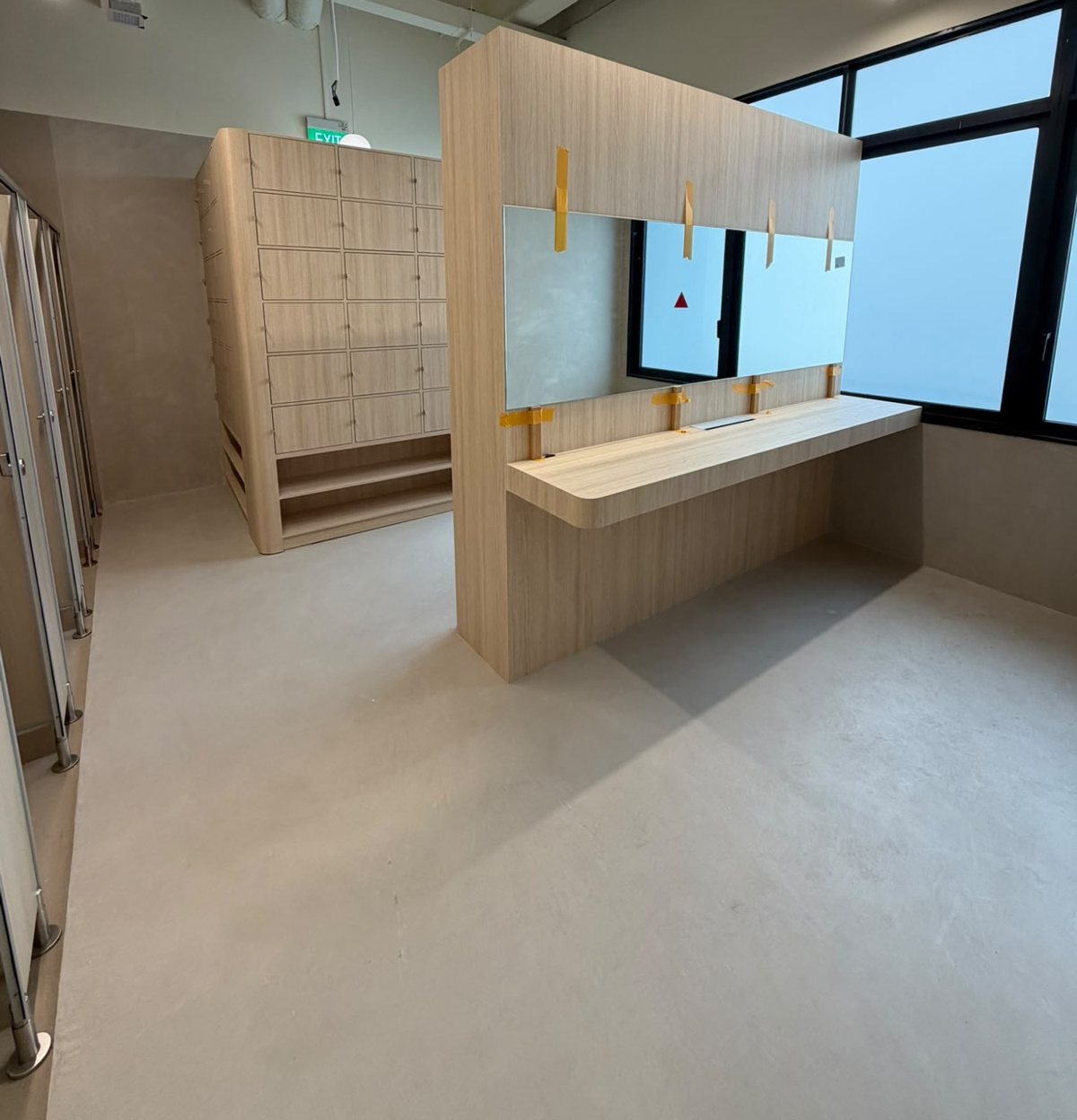
Yes. Microcement works well in commercial and retail spaces in Singapore, such as shops, cafes, offices, salons and showrooms, as long as the surface underneath is sound and the top coat is chosen for the traffic it will take. It gives one continuous floor or wall with no grout lines, it is only 1–1.5mm thick, so it can often go over existing sound tiles, and that keeps noise, debris and downtime down during a fit-out.
Why businesses choose microcement
- A seamless look: floors, walls, counters and display plinths can share one surface, which reads as a single, deliberate design.
- Less hacking: sound, level, well-bonded tiles can usually stay in place, which helps in malls and office buildings with strict rules on noise and debris.
- Minimal height change: at 1–1.5mm the floor barely rises, so doors, shopfront thresholds and floor transitions are easier to keep.
- Easy daily cleaning: with no grout joints there are fewer places for dirt to collect. A pH-neutral cleaner and a mop is the routine.
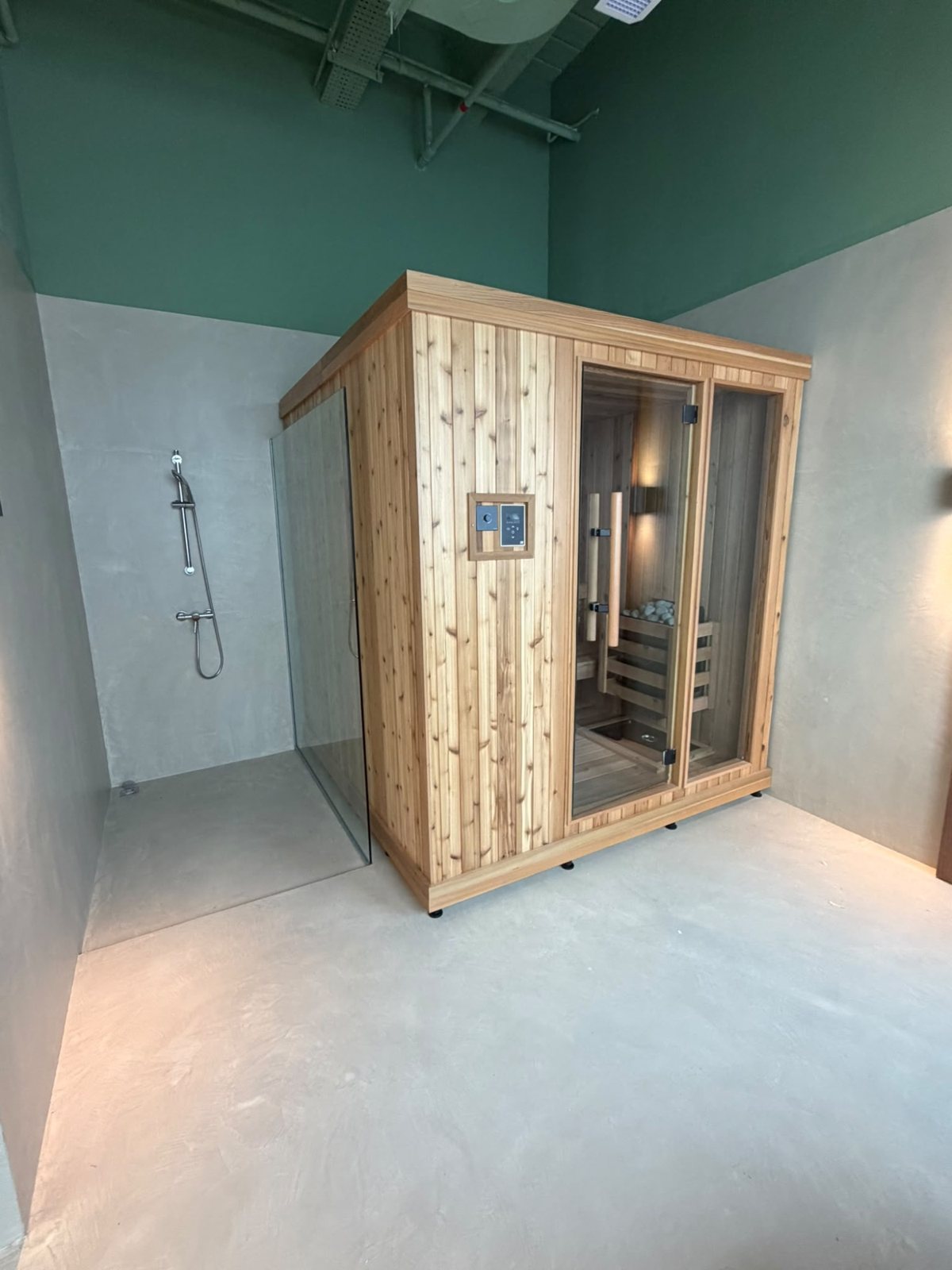
Where it suits, and where to be careful
Microcement suits feature walls, retail floors with normal foot traffic, reception areas, counter fronts, washrooms and display pieces. Take more care in these areas:
- Heavy wheeled traffic: pallet jacks, heavy trolleys and dragged furniture are hard on any thin finish. Ask which system and top coat is specified for that load.
- Commercial kitchens and wet production areas: constant standing water, grease and harsh chemicals need a specification built for that use, if microcement is suitable at all.
- Moving substrates: structural joints, cracked screed or loose tiles must be dealt with first. Hairline cracking comes from the substrate, not the product.
- Entrances: grit carried in from outside wears any floor. Entrance mats make a real difference.
The right system for the traffic
Not everything sold as microcement is the same material. We work with Natural Surface from Australia: the M Series, premixed so every batch is consistent, configured as three systems (NS Grit, NS Solid and NS Xtreme) so each project, area and use gets the build-up it needs. The finish is four layers, a base coat, a face coat and two top coats, laid by hand. In a commercial space, the top coat is what takes the wear, so ask how it handles foot traffic, chair legs, spills and cleaning chemicals, and when it may need refreshing.
Planning around a fit-out
Most commercial jobs sit inside a larger fit-out with an interior designer or main contractor. A smooth job usually comes down to sequencing:
- Survey the existing surface early, before the programme is fixed.
- Agree when other trades are off the area, since the layers need time to set undisturbed.
- Protect the finished surface until handover. Fresh microcement should not have ladders, trolleys or materials dragged across it.
- Check the building or mall rules on working hours, noise and debris, and plan the works around them.
We supply and apply for ID firms and main contractors across Singapore. Tell us the sequence and the handover condition, and we will tell you what we need and when we are off site. Export enquiries are welcome too.
What affects the quote
Every quote follows a site assessment. The main drivers are the area, the condition of the existing surface and how much preparation it needs, the system and finish chosen, details such as steps, counters and edges, and the access and working hours on site. More on this in what drives the cost of microcement.
Looking after a commercial microcement floor
Sweep or vacuum grit daily, mop with a pH-neutral cleaner, put felt pads on chair and table legs, and wipe spills promptly. Avoid bleach, acids and abrasive pads. See how to clean and maintain microcement floors for the full routine, and does microcement crack over time for what causes cracks and how to prevent them.
See real work first
Before you commit, ask any applicator for three things: their showroom, a finished site rather than a render, and which product they use and where it comes from. You can browse the Commercial / Retail photos on our Projects page, compare textures on the Finishes page, or visit our Tampines showroom by appointment to see and touch real samples.
Quick answers
Is microcement durable enough for a shop floor?
For normal retail foot traffic, yes, when it is laid over a sound substrate with a top coat chosen for the traffic. Heavy wheeled loads and dragged furniture need a specification built for that use.
Can microcement go over the existing tiles in a commercial unit?
Often yes. Sound, level, well-bonded tiles can stay in place, and the microcement is laid over them at 1 to 1.5mm, which avoids hacking. Loose or cracked tiles must be fixed first.
Do you work with interior designers and main contractors?
Yes. We supply and apply for ID firms and main contractors across Singapore. Share the sequence and handover condition and we will tell you what we need and when we are off site.
How is a commercial microcement project priced?
Prices are quoted after a site assessment. The area, the existing surface, the preparation needed, the system and finish, and access and working hours all affect the quote.
Next step
Send us the rooms, the rough area and a photo of what is on the surface now. WhatsApp +65 8049 1188 or use the contact page. Our Tampines showroom is open by appointment.